

June 1, 2026 — After almost nine years of work with the Wallace Center, our dear friend and colleague Elisabeth Spratt is moving along to a new opportunity. Our team has learned so much from Elisabeth’s technical knowledge, strategic mind, and deep care for humans and nonhumans alike. We are so thrilled for her next chapter and grateful for her leadership and innumerable contributions to our work. Elisabeth shared some reflections on her time at Wallace Center. They have inspired us and we hope they also inspire you!
When you think about your work at the Wallace Center, what are you proudest of?
We have been able to do quite radical work to perennialize agriculture in the Midwest in my time at Wallace Center, and we’ve been able to do that through centering relationships – between organizations, between humans, and between species. There are two areas, working at very different scales, that I am personally proudest of: promoting place-based regenerative grazing adoption and regional efforts to support dairy grazing.
First, our place-based work: Regenerative agriculture adoption has been uneven, and while landscape-level benefits – flood mitigation, in-stream water quality improvement, habitat creation – are in theory possible, efforts are rarely concentrated enough to realize those benefits. That’s why we worked with the Tainter Creek Farmer Led Watershed Council, Valley Stewardship Network, and University of Wisconsin to dedicate significant financial and technical assistance to grazing systems in the relatively small watershed of Tainter Creek, Wisconsin. Led by the vision of the watershed council, our goal was to improve the health of Tainter Creek. And instead of just modeling it, we measured it too!
And now, a few years after the end of the program, the results are coming better into focus: it appears that in-stream phosphorus concentrations went down by about 14%, while we supported new practices on just 3% of acres (shoutout Lexi Wellman and University of Wisconsin for continued data crunching). That’s what targeted use of perennial practices can do! And now we’re adapting this work with Washington County Soil and Water Conservation District in southern Indiana, including further development of GrazeScape, a decision support tool that can be used to target and plan grazing practices developed by UW. I’m thrilled to see where this work goes.
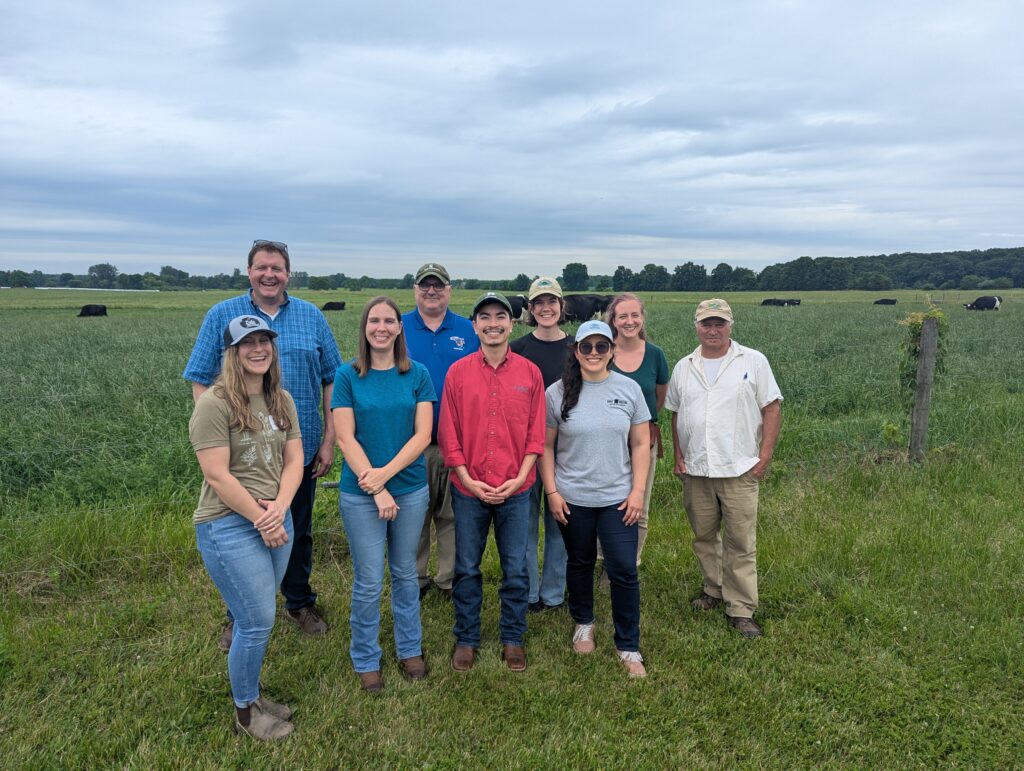
Second, our dairy work: As we stare down another very tough year ahead in the dairy belt, I find myself thinking a lot about all the incentives poured into regenerative agriculture, and what kind of dairy system it will create. Unfortunately, despite a lot of good intentions, the answer right now looks to me like an extremely concentrated system where some conservation practices are applied to crops and manure management, but otherwise “get big or get out” are the only options, all the people managing and working on these farms have less power, and cows never see the light of day or a fresh blade of grass.
Dedicated work is desperately needed (and indeed, is already happening!) to imagine a different way. One of the farmers we work with recently pointed out that dairy brands all have pastured cows on their trucks and websites – they inherently know what their customers want to see, even if their sourcing looks nothing like it. So clearly there is massive market potential, something I’m excited to see Dairy Grazing Alliance continue to develop. And in partnership with DGA, Food Finance Institute, and many others, our team has been working on demonstrating how dairy grazing can be a financially viable pathway – and to workshop some big ideas to reshape how dairy grazing can be supported and incentivized to scale.
What are your hopes for the Wallace Center?
The Wallace Center has always gone where needed for food and agricultural systems change. The Center’s approach, for longer than I’ve been alive, has been to adapt. So much upheaval has happened in the last decade, along with further entrenchment of consolidation in the food system and the financialization of land. Some big ideas are needed. My hope is that Wallace Center, and its wonderful humans, has the space and discernment to meet the moment, to try new things, to always stay accountable to our relationships, and to be joyful while doing it.
Who has inspired you?
There are so many humans who have inspired me in this job, particularly the many people – farmers, workers, movers of food, nonprofit thinkers and doers – who are completely fearless when it comes to challenging the status quo of how food is produced and makes its way to us. Many of those same people have been incredibly thoughtful about naming ways in which power and history have shaped our current day food systems and exploring new and old ways of sharing power in the next iteration of food systems we are building together. Some of that rebelliousness and optimism brushed off on me, and I consider myself lucky for that.
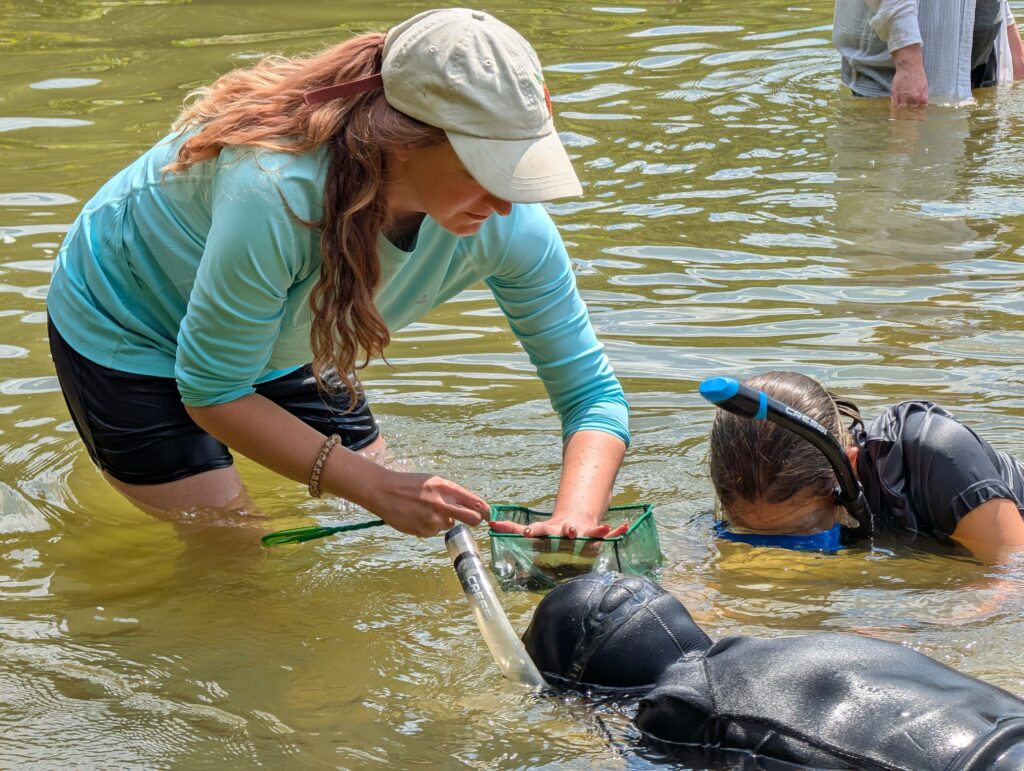
There are also many non-humans who have inspired me, which the team knows I am not shy about shouting out! Endless thanks to all the plants, birds, bugs, and herps (career highlight: hellbenders!) who have kept me engaged and inspired by all there is to learn and be in relationship with.
Anything else to add?
In a moment where so much of the world arcs toward virtual, synthetic, or artificial, our shared work in food systems and regenerative agriculture has tremendous potential to ground us: in our shared humanity, in the realness and beauty of all the living things we rely on, and in some delicious things to eat. I’ll be forever rooting for the work of the Wallace Center and its many brilliant partners. I’m grateful to say that I’m not leaving this space, and I’ll continue to be in relationship with you all. We have a lot of work to do!
Cover photo taken by Elisabeth. Elisabeth was behind the camera for many of Wallace Center’s field days, workshops, and team retreats over the years. Her beautiful photos are all over our website and publications (and a few of us have her to thank for our current headshots).